
Consumer demands and the ‘engagement divide’

Brands don’t always know how their content is landing with customers, and the answers to communication questions can be complex. | Jason Rosewell, Unsplash
Communication between brands and consumers isn’t as clear-cut, or as effective, as both parties would like.
BY Lindsay Beaton, Founder/Principal
Beaton Path Communications LLC
A March 2026 piece on customer engagement by Ellie Quacquarelli, strategic consultant and team lead at SAP Engagement Cloud, makes it very clear that 1) customers care about the brands they do business with, and 2) brands tend to fall short when it comes to making the most of that fact.
SAP Engagement Cloud “empowers marketers around the world to create truly personalized omnichannel experiences that deliver business outcomes,” according to the company’s mission statement, and this year they released the "2026 Global Engagement Index Report” focusing on consumer expectations. Interestingly, while consumers seem to want to connect with brands, they also say brands are not living up to their relationship expectations. This gap between expectation and reality has been dubbed the “engagement divide.”
According to the report, 82% of consumers have been disappointed by a brand. Only 38% of consumers believe brands know who they are and when they need when contacted. Along the same vein, 40% of consumers say brands don’t understand them as people. Do these numbers sound like we’re talking more about a failed relationship than an unsatisfactory business transaction? That’s because we are. For a lot of consumer goods these days, transactions are simply not enough. We live in an age where a company’s mission statement and donation history are a click away. Anyone can look up whether a brand has put its money where its mouth is. When you’re talking about pet food, the level of consumer care goes up. If you want to take care of people’s pets, you’re going to have to do some serious relationship building with their humans first.
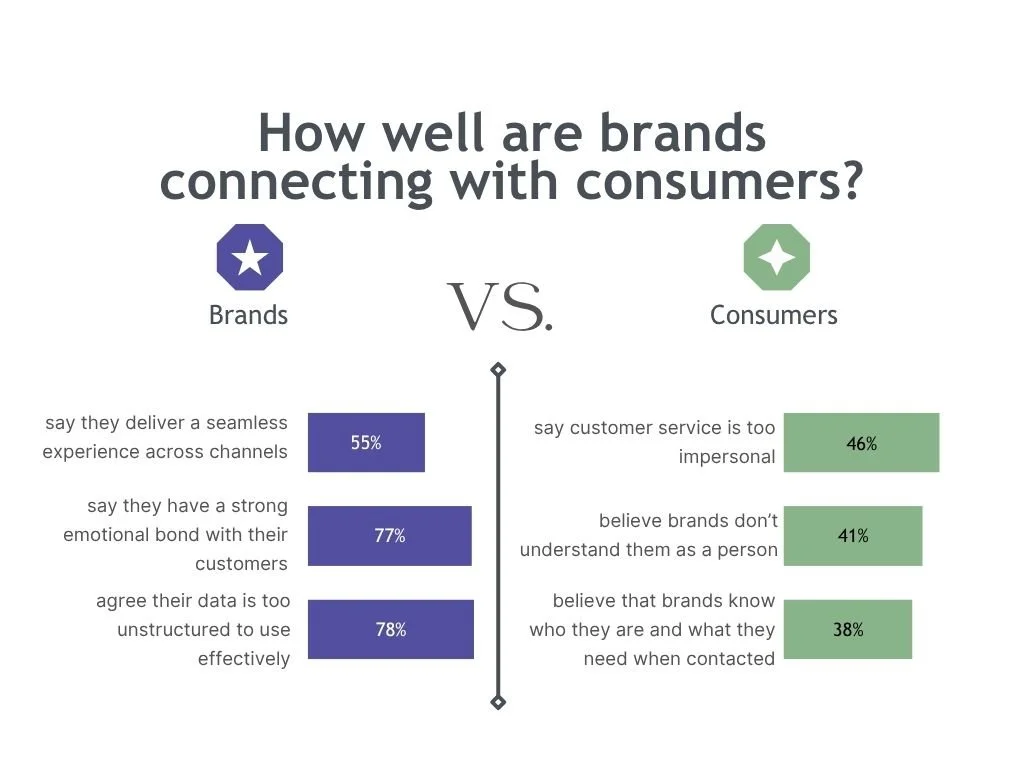
Brands see themselves as effectively communicating with their customers, but the customers themselves don’t necessarily agree. | Data pulled from SAP Engagement Cloud’s “2026 Global Engagement Report”
Bridging the ‘engagement divide’
It can be difficult to find out how to minimize the engagement divide when consumers seem to be everywhere, all the time.
“Customer expectations are moving at a new speed,” says Sara Richter, CMO of SAP Engagement Cloud, in the report’s introduction. “With AI at their fingertips, people compare, decide and switch in an instant, and those micro moments now define whether a brand wins or loses a relationship. Most organizations are investing in AI, but the real challenge lies beneath the surface. Disconnected teams, scattered systems and data that can’t be activated in real time make it hard to show up with the clarity and consistency customers expect.”
So how can a pet brand most effectively engage its customers? The answer is multi-faceted, and one size definitely does not fit all. Here are some questions a brand needs to ask itself:
What are the demographics of our customer base? (Age may be just a number, but when it comes to social media use, there are definite trends!)
What types of messaging do we want to focus on? (Videos? Blog posts? Research papers? Promotions? Not all platforms are created equal when it comes to content types.)
How often do we want to reach out? (Daily? Social media is probably for you. Weekly? Perhaps an eNewsletter. As needed? A combination strategy might work best.)
How much of a conversation are we willing to have? (Do you intend to put content into the internet-verse without monitoring it, or are you truly looking to engage with whoever meets you there?)
How can we best capture and utilize our consumer data? (It’s one thing to find your consumers and quite another to keep them.)
Meeting consumers where they’re at
These questions aren’t exhaustive, but they can provide a solid initial journey for a brand looking to dive deeper into consumer connectivity. In an age where humans can easily consume dozens of data points before breakfast the balance between a reciprocal relationship and a one-sided one can be thin, but it is an important line to pay attention to. Brands must be where their consumers are, communicate in ways that consumers find effective, and gather any data in the most efficient way possible in order to grow.
The engagement divide will probably always exist. The realistic goal should be awareness and a focus on keeping that gap as small as possible.