
US consumer perception: Taking care of pets as expensive as taking care of kids
The August 2026 (Q3) BMO Real Financial Progress Tracking Research highlights the cost of having kids, but provides insights into pet ownership costs, as well.
BY Lindsay Beaton, Founder/Principal
Beaton Path Communications LLC
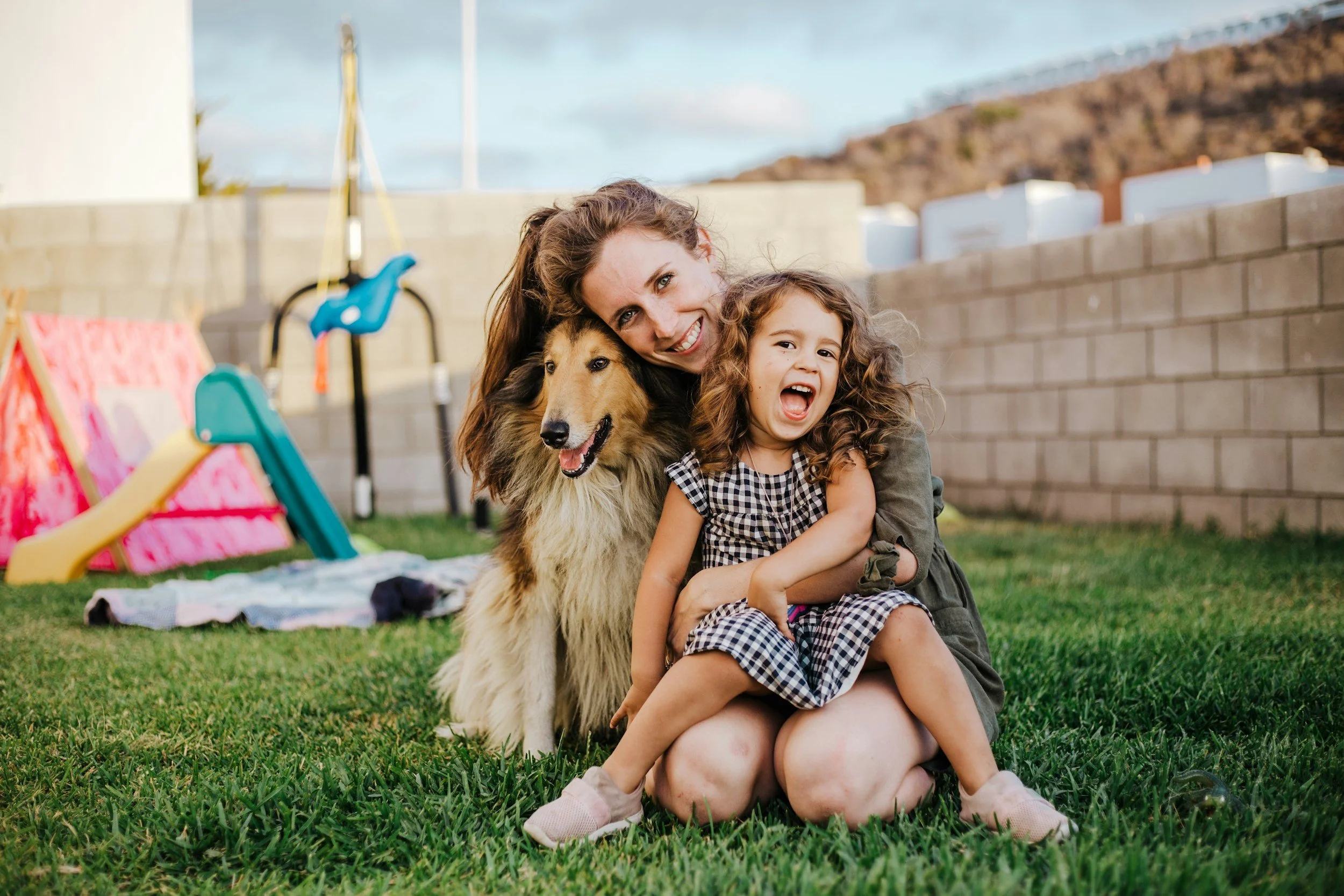
Some consumers have the perception that pets and kids hit their bank accounts equally these days amidst rising costs and economic challenges. | Josue Michel, Unsplash
North American bank BMO’s most recent, third-quarter topline report on “Real Financial Progress Tracking Research 2026: United States” came out in August, and while the focus was overwhelmingly on how Americans feel about the costs of raising a family in the current economic landscape (spoiler alert: not great), pets did get a few mentions worth looking at.
Looking at the data
One of the first questions analyzed in the report was, “To what extent do you agree/disagree with the following statements about family and finances?” The most interesting statements offered from a pet perspective were:
I agree with pet owners who say their pet is a full member of their family.
These days, the cost of taking care of a dog or cat is almost as high as having a child.
Unsurprisingly, 79% of overall respondents completely or somewhat agreed with the first statement, though that number was down slightly from Q3 in 2025 (81%). Additionally, a higher percentage of Hispanic respondents (84%) completely or agreed with the statement.
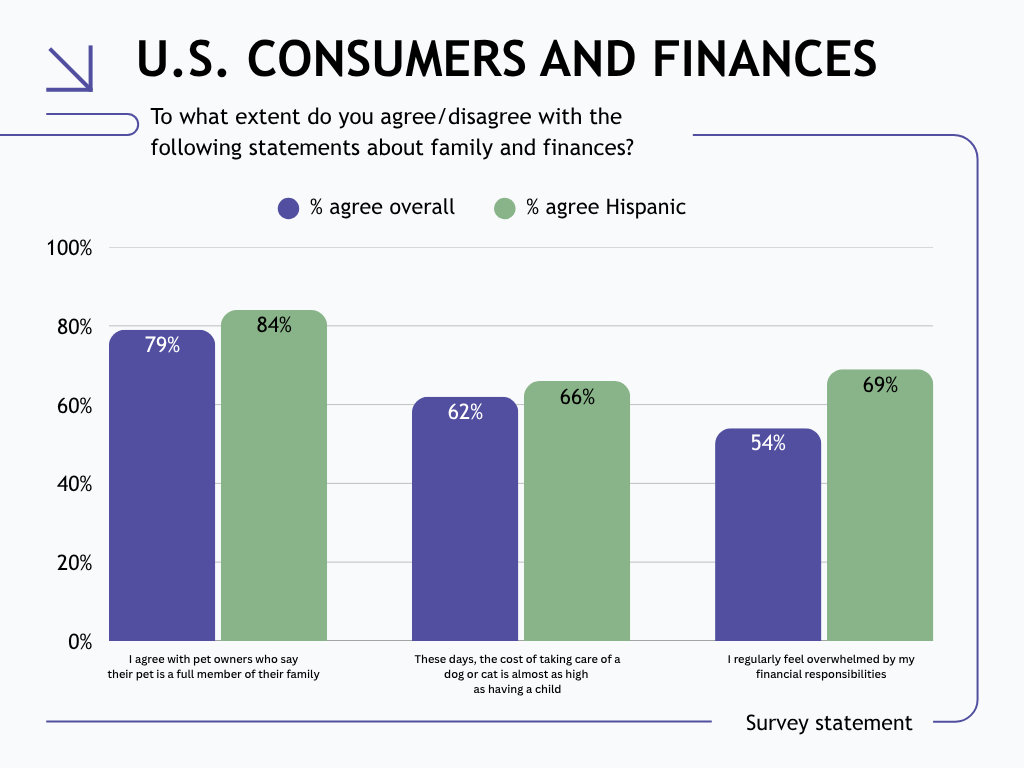
A majority of the 2,500 respondents in BMO’s 2026 Q3 consumer research “completely” or “somewhat” agreed that having a dog or cat is almost as expensive as having a child amidst economic challenges. Respondents who identified as Hispanic were even more likely to “completely” or “somewhat” agree. | Data pulled from “BMO Real Financial Progress Tracking Research 2026: United States” Q3 report
When discussing pet costs vs. child costs, 62% of overall respondents (and 66% of Hispanic respondents) completely or somewhat agreed that it now costs almost as much to take care of a dog or cat as it does to have a child.
When the numbers are set side by side, of course, this is not a true statement. According to online personal finance company and digital bank SoFi, the annual average cost of raising a child in the U.S. is US$16,857 (or roughly US$303,418 to raise them to 18 years of age). Comparatively, the average annual cost of taking care of a dog, according to online services marketplace Rover, is US$1,695–$6,025, depending on breed and size. Cats are less, according to Rover, coming in at US$850–$4,400 annually, depending on life stage.
A lot of stipulations are in all of these numbers: geographic location, economic bracket, medical needs and age. Humans also must consider things like education and activities, while pets have adjustments based on breed and life stage. It’s almost impossible to nail down an exact number, but no matter how you look at it, human children are still a lot more expensive than fur babies.
Perception is reality in the pet food aisle
That being said, when it comes to how people feel about their bank accounts and where the money’s going, perception can be reality at the purchase point. A pet owner who was just handed a $600 veterinary bill is a lot more likely to side-eye the costs of premium pet foods. Anyone with a large breed dog is likely to sigh at the price tags on their dog food bags, regardless of what the price per pound comes out to. When 54% of BMO survey respondents completely or somewhat agree that “I regularly feel overwhelmed by my financial responsibilities,” any repeat cost can feel like an unsustainable one.
This means that the pet industry must remain sensitive to the feelings of consumers, even if the math doesn’t tell a matching story. It needs to be a priority for pet food brands especially to be able to sell themselves to pet owners in a way that acknowledges the current reality. If they can provide enough reasons why their product is worth the price, consumers will at least feel better about forking over their hard-earned dollars.